
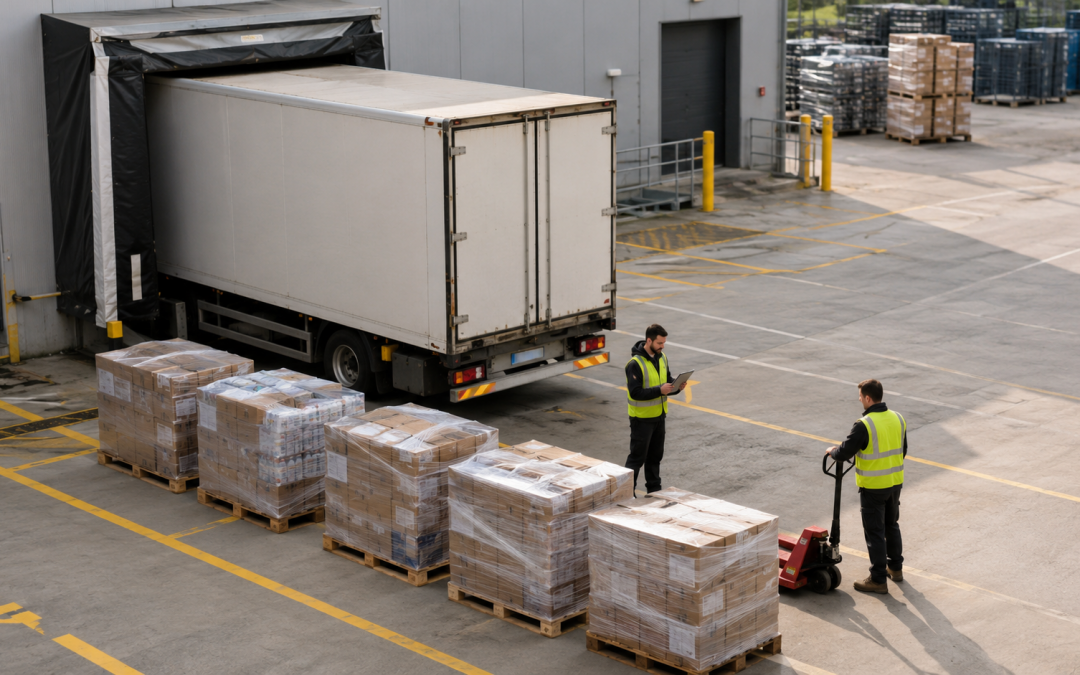
Waiting times during loading and unloading are one of the factors that can most affect the efficiency of road freight transport. When a lorry remains stationary at a loading bay for longer than necessary, it does not only delay a delivery: it also disrupts route planning, increases operating costs and can cause incidents throughout the supply chain.
Reducing these waiting times does not depend solely on the carrier. It requires coordination between the company sending the goods, the warehouse, the consignee and the logistics operator. At Subitur, we work with transport and logistics solutions adapted to different needs, which is why good prior planning is essential to ensure a more agile, safe and efficient service.
Why waiting times during loading and unloading matter
In road transport, every operation is linked to a specific plan: collection time, route, driving times, delivery at destination and possible connections with other loads or services. For this reason, a delay at the loading point can affect the rest of the working day.
Waiting times during loading and unloading can be caused by different factors: goods that are not ready, incomplete documentation, lack of space at the loading bay, labelling errors, difficult access or poor coordination of schedules. Although some unforeseen events are unavoidable, many delays can be reduced if the operation is properly prepared before the vehicle arrives.
Goods prepared before the lorry arrives
One of the most important points is ensuring that the goods are ready before the scheduled collection time. This means that products should be packaged, palletised, labelled and placed in an area that is accessible for loading. When goods are prepared at the last minute, errors may appear in the number of packages, packaging issues, doubts about weight or difficulties in handling the load. All of this slows down the operation and can affect transport planning.
In services such as full loads, groupage, waste transport, bulk goods or specialised transport, each type of goods requires different preparation. That is why it is important to review the type of load, volume, weight and any specific requirements in advance.
Complete and reviewed documentation
Documentation is another key factor in reducing waiting times during loading and unloading. Delivery notes, consignment notes, CMR documents, order references, certificates or specific documentation should be ready before the vehicle reaches the collection point.
In international transport, the CMR consignment note is particularly important, as it accompanies the goods during the journey and includes essential information about the sender, carrier, consignee, load and delivery. You can find out more in our article on the CMR in international transport. Incomplete or incorrect documentation can cause delays, additional checks or even prevent transport from starting at the scheduled time.
Well-coordinated loading bay schedules
Good management of loading and unloading schedules helps avoid unnecessary waiting times. To achieve this, the carrier should know the assigned time slot, the exact access point, the contact person and the conditions at the loading bay.
It is also advisable for the warehouse or logistics centre to have all the necessary information before the vehicle arrives: type of lorry, number of packages, weight, loading requirements and any special instructions. This coordination is especially important for companies with high goods movement, several loading bays or recurring deliveries. Clear communication helps avoid overlaps, queues and downtime.
Suitable access for the type of vehicle
Not all vehicles require the same access conditions. Before scheduling a collection or delivery, it is important to confirm that the loading point allows the vehicle to manoeuvre correctly, park safely and access the loading bay without difficulty.
Possible time restrictions, limited-access areas, loading bay height, availability of forklifts, pallet trucks or other handling equipment should also be taken into account. At Subitur, we have a fleet prepared for different logistics needs, allowing the service to be adapted to the type of goods, route and loading or unloading conditions.
Clear information on weight, volume and packages
To plan transport properly, it is essential to know the weight, volume and number of packages of the goods. This information makes it possible to assign the right vehicle, organise the load and avoid last-minute changes.
When the information provided does not match the actual goods, problems with space, handling or documentation may arise. That is why, before collection, it is advisable to check that the details shared with the logistics operator are correct. Accuracy in this information helps reduce incidents and speeds up both loading and unloading.
The importance of safety during loading and unloading
Reducing waiting times does not mean working in a rush. Safety must always be the priority. Poorly handled, badly stowed or incorrectly secured goods can cause damage to the load and pose risks to the people involved in the operation.
For this reason, it is essential to follow loading procedures, use the right equipment and secure the goods correctly before transport begins. The Spanish Ministry of Transport provides information on good practices related to road safety and load securing. A fast operation must also be safe, organised and controlled.
Communication between customer and logistics operator
Prior communication is one of the elements that most helps reduce waiting times during loading and unloading. Providing accurate information about the goods, schedules, access, documentation and delivery point conditions makes it possible to anticipate potential incidents.
It is also important to maintain fluid communication during transport. At Subitur, vehicles are equipped with GPS geolocation systems, which makes it easier to track goods and coordinate operations more effectively. This traceability provides greater control and allows for a quicker response to schedule changes, route incidents or customer needs.
How to reduce waiting times in practice
To reduce waiting times during loading and unloading, companies can apply a few simple measures:
- Prepare the goods before the vehicle arrives.
- Check weight, volume and number of packages.
- Have all documentation complete and available.
- Confirm loading bay times and the contact person.
- Ensure access is suitable for the type of lorry.
- Label each load unit correctly.
- Communicate any special requirements to the logistics operator.
- Prioritise safety during handling and stowage.
These actions help make transport smoother, reduce incidents and improve the efficiency of the entire supply chain.
Subitur, transport with planning and coordination
Waiting times during loading and unloading may seem like an operational detail, but they have a direct impact on punctuality, cost and the quality of the logistics service. Proper preparation helps optimise routes, avoid delays and ensure that goods reach their destination in better conditions.
At Subitur, we offer transport and logistics solutions adapted to each customer, with services including full loads, groupage, storage, bulk goods, waste and specialised transport. If your company needs to improve the coordination of its road shipments, you can contact Subitur and request more information about our services.