
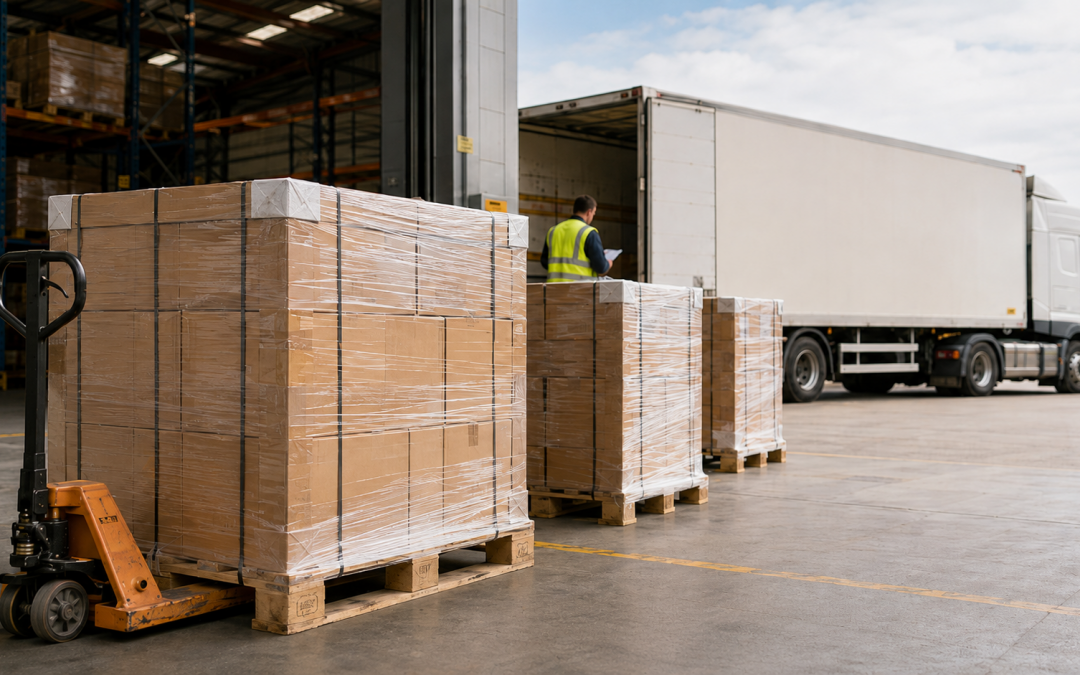
Preparing goods for transport is an essential step to ensure that every shipment reaches its destination in good condition, within the expected timeframe and without unnecessary incidents. Before the lorry sets off, several aspects need to be checked: packaging, palletising, labelling, documentation, weight, volume and prior coordination with the transport company.
Proper preparation not only protects the goods, but also makes handling easier, improves safety during the journey and helps optimise the logistics service. At Subitur, we work with different transport and logistics solutions, so adapting the preparation of each shipment to the type of service required is key to ensuring a more efficient and secure operation.
The importance of preparing goods properly for transport
In road freight transport, every detail matters. Insufficient packaging, poorly palletised goods or incomplete documentation can lead to delays, product damage or problems at the point of delivery.
That is why, before booking or scheduling a transport service, it is important to analyse the characteristics of the goods: what type of product it is, how much it weighs, how much space it takes up, whether it is fragile, whether it requires special conditions or whether it needs to be transported exclusively.
Preparing general palletised goods is not the same as preparing bulk goods, waste, a full load or a shipment for groupage. Each case requires different planning and proper coordination between the customer and the logistics operator.
1. Choosing the right packaging
Packaging is the first layer of protection for the goods. Its purpose is to prevent knocks, movement, moisture, deformation or any other damage that may occur during loading, transport or unloading.
To choose the right packaging, it is important to consider the type of product, its fragility, weight, volume and the length of the journey. Boxes, shrink wrap, edge protectors, separators, internal protection or filling materials may be required depending on the characteristics of the load.
For fragile or delicate goods, it is advisable to reinforce the most vulnerable points and avoid empty spaces inside the packaging. For heavy or industrial products, the packaging must be able to withstand handling with a forklift, pallet truck or other loading equipment.
Good packaging reduces the risk of incidents and helps ensure that the goods arrive at their destination in the same condition in which they were collected.
2. Palletising: stability and easier handling
Palletising is one of the most common systems for preparing goods for road transport. A well-organised pallet makes loading and unloading easier, improves shipment stability and allows the available space in the vehicle to be used more efficiently.
For proper palletising, it is important that the goods do not overhang the base of the pallet, that the weight is evenly distributed and that heavier products are placed at the bottom. Excessive height should also be avoided, as it may affect the stability of the load.
The use of film, straps, edge protectors or securing systems helps keep the goods compact and protected during the journey. Good palletising also optimises space and makes logistics management easier, especially in services such as groupage or distribution.
3. Clear and visible labelling
Labelling is another essential point. Each load unit must be correctly identified to avoid mistakes during collection, handling or delivery.
A clear label should include basic information such as the consignee, delivery address, number of packages, shipment reference and, where necessary, special handling instructions: fragile, keep upright, do not stack, protect from moisture or any other relevant warning.
When goods are being sent to several destinations or form part of a wider logistics operation, labelling becomes even more important. Correct identification speeds up logistics processes and reduces the risk of confusion.
4. Documentation required for transport
Documentation must be prepared before collection in order to avoid delays or incidents during transport. Depending on the type of goods, origin, destination and contracted service, different commercial documents, delivery notes, consignment notes, certificates or specific authorisations may be required.
For national operations, documentation is usually simpler, but international transport may require a more detailed review. Some goods, due to their nature, also require specific document management, such as waste, bulk goods or goods subject to particular regulations.
In Spain, Royal Decree 563/2017 regulates roadside technical inspections of commercial vehicles, with the aim of improving road safety and environmental protection. For this reason, preparing the load correctly and having the appropriate documentation in place form part of a responsible and professional operation.
5. Weight and volume: key data for planning transport
Before sending goods, it is essential to know their actual weight and volume. This information makes it possible to choose the right vehicle, calculate the space required, plan the load and determine whether the most suitable service is a full load, groupage or another logistics solution.
Weight also affects how the load is distributed inside the vehicle. Poor distribution can affect stability during the journey and create risks on the road. That is why it is always advisable to provide the total weight, number of packages, dimensions and any special characteristics of the goods.
At Subitur, we have a fleet prepared for different logistics needs, allowing each service to be adapted to the type of load, volume and route.
6. Loading and securing the goods
Loading and securing are essential to guarantee transport safety. It is not enough simply to load the goods: they must be positioned and secured correctly to prevent movement, falls or damage during the journey.
Good practices in load securing for road transport help reduce risks for the goods, the driver and other road users.
A properly secured load improves safety, prevents damage and helps meet the technical and regulatory requirements of road freight transport.
7. Prior coordination with the transport company
Coordination between the customer and the transport company is key to ensuring the whole process runs smoothly. Before collection, it is advisable to confirm the address, schedules, contact person, access conditions, type of goods, loading and unloading requirements, documentation and any special needs.
It is also important to communicate whether the goods require specific handling, whether there are time restrictions at the delivery point or whether a particular type of vehicle is needed.
Good communication makes it possible to anticipate potential incidents and plan transport more accurately. At Subitur, we offer a personalised service to adapt each operation to the real needs of every customer.
8. Adapting preparation to the type of goods
Each type of goods requires a different form of preparation. General palletised goods, industrial products, bulk goods, waste or SANDACH CAT.3 goods are not handled in the same way.
That is why, before preparing a shipment, it is advisable to review the specific characteristics of each product and consult the logistics operator on the best way to prepare it. You can find out more in our article on the types of goods transported by road.
Preparing goods correctly helps reduce incidents, optimise timings and guarantee safer, more efficient transport adapted to each requirement.
Subitur, road transport with safety and planning
Preparing goods for transport is not just a matter of packaging. It is a process that involves organisation, safety, documentation, coordination and logistics expertise.
At Subitur, we work to offer road transport solutions adapted to each customer, with services including full loads, groupage, waste, bulk goods, storage and SANDACH CAT.3 transport. Our vehicles also include GPS geolocation systems to make it easier to track goods during the journey.
If your company needs to send goods by road with safety, planning and control, you can contact Subitur and request more information about our transport and logistics services.