
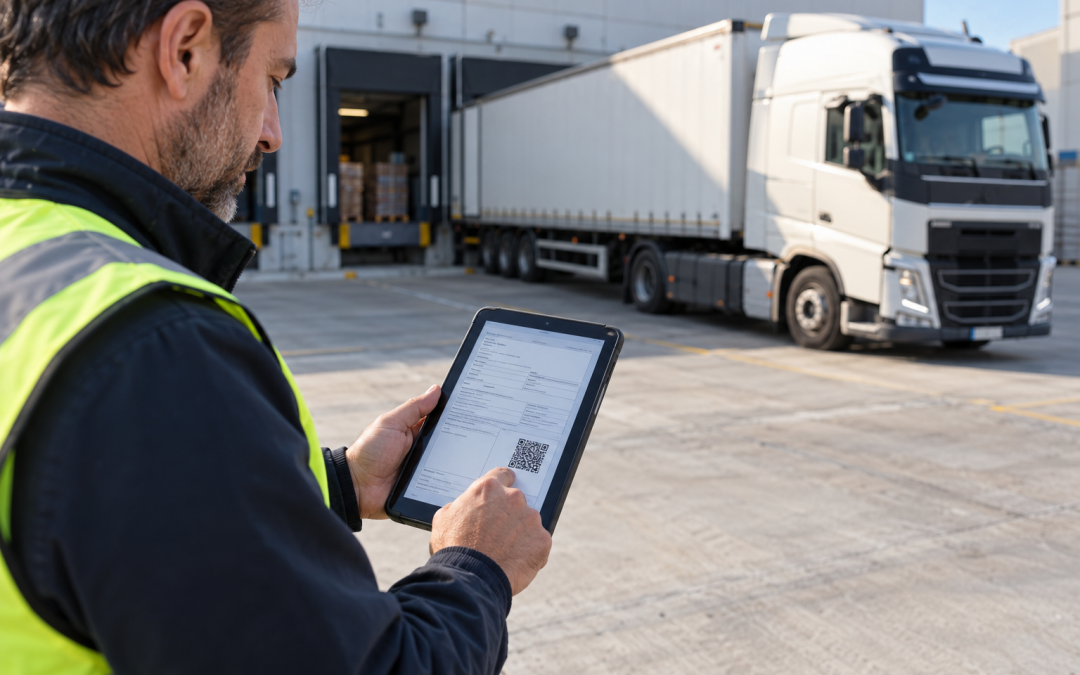
Road freight transport in Spain has taken an important step towards digitalisation. Since 5 October 2026, the Electronic Administrative Control Document (DeCA) has been mandatory for domestic public road freight operations subject to this documentation requirement, replacing the traditional paper-based control document.
Introduced under Spain’s Sustainable Mobility Act (Law 9/2025), this change marks a significant development in how transport documentation is managed, stored and verified, affecting both haulage companies and businesses arranging freight movements.
What is DeCA and who does it affect?
DeCA is the electronic version of the administrative control document required for certain road freight operations in Spain. Its purpose is to record essential transport details and enable the competent authorities to verify them when necessary.
The requirement applies to the carriers performing the transport and the contractual consignors involved in domestic public road freight services covered by the legislation, including cabotage operations within Spain. However, international transport operations passing through Spanish territory remain subject to the relevant international transport documentation requirements.
What are the requirements for the new digital document?
According to the resolution published in Spain’s Official State Gazette on 12 June 2026, DeCA must be created digitally before the transport operation begins and must meet specific technical requirements.
These include generating a PDF file no larger than 5 MB directly from a computer application, with a QR code providing access to the document through a secure web address. Simply scanning a paper document and saving it as a PDF is therefore not sufficient.
Furthermore, electronic documents must be retained for at least one year and made available for download during official roadside inspections.
What benefits does digitalisation bring to road freight?
Beyond meeting a legal obligation, DeCA offers an opportunity to streamline administrative procedures, reduce paperwork and improve access to information relating to each transport operation.
Digital documentation can also help businesses organise their internal processes more effectively, retrieve information more quickly and support better communication between the different parties involved in the logistics chain.
Ultimately, this transition reflects a broader move towards a more connected, organised and technologically advanced road transport sector.
Subitur: keeping pace with the changing transport industry
At Subitur Transports, we believe that professionalism in road freight also means staying informed about the regulatory and technological developments shaping our industry.
We therefore place great importance on effective transport management and solutions that make shipments easier to monitor, using GPS-equipped vehicles and services tailored to the requirements of each business.
Explore our road freight and logistics services to discover how we support businesses with professional domestic and international transport solutions.